
Film Grain: What It Is and How It Looks
Film grain is visible density variation shaped by a photographic emulsion, exposure, development, and enlargement or scanning. Adding a digital grain effect introduces controlled texture that can suggest an analog aesthetic without reproducing the full behavior of a film stock.
Published April 5, 2026 · Updated October 3, 2026 · Written and tested by Maximilian Braun

Original
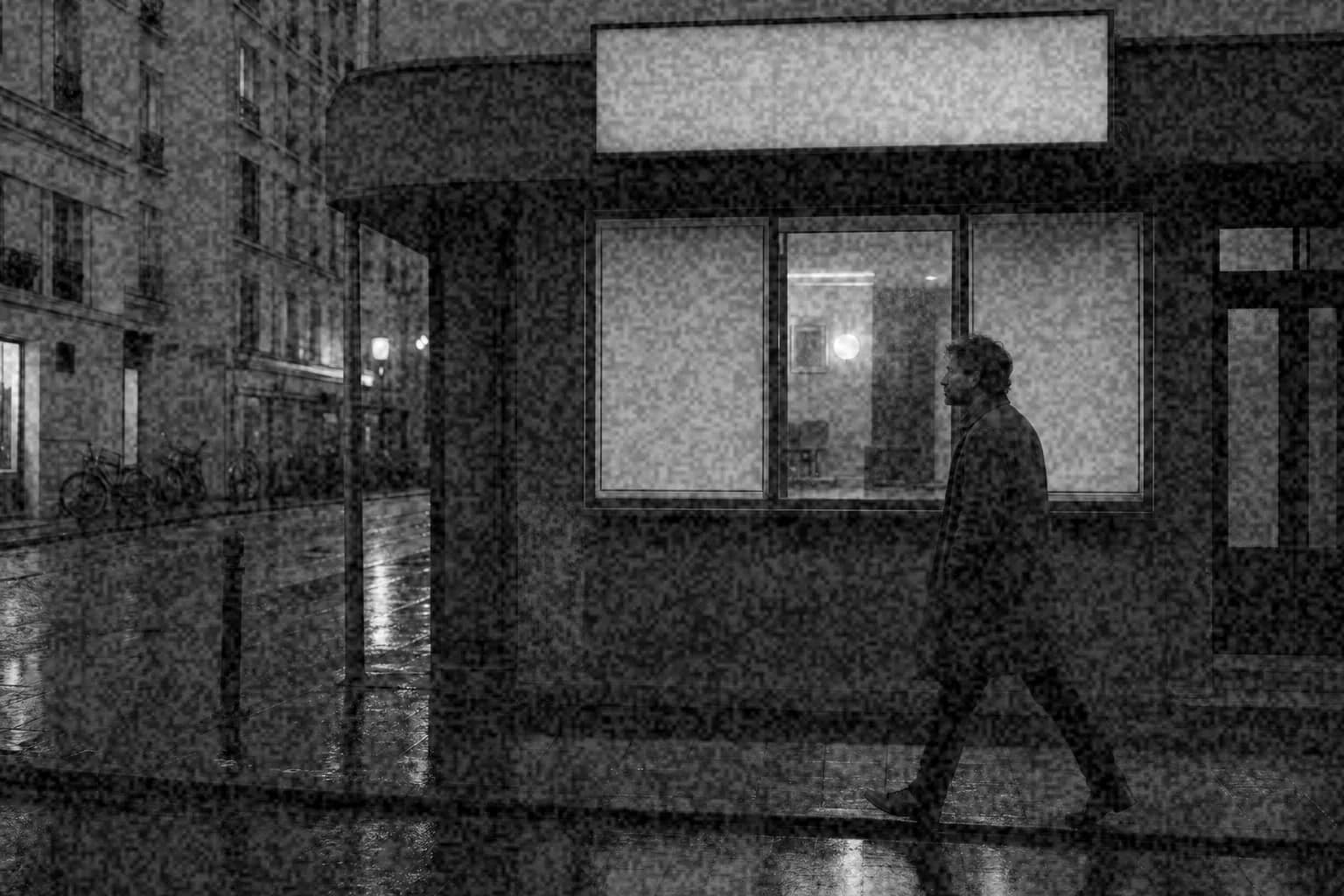
Processed with imagegrain
Why Add a Film Grain Effect?
Digital photos can look very clean, while grain introduces visible texture and variation. Photographers use it deliberately for mood, to soften an overly polished rendering, or to reduce the visibility of banding in smooth gradients. Whether it improves an image is a creative choice, not a universal rule.
Analog Aesthetic
Suggest the broader character associated with fine-grained or pushed film. A generic digital grain control cannot reproduce a named stock's emulsion, exposure, development, and scan.
Mood and Atmosphere
Grain adds texture that flat digital images lack. It can make a portrait feel intimate, a landscape feel cinematic, or a street photo feel raw and documentary.
Hide Digital Artifacts
Grain masks compression artifacts, color banding, and noise reduction smearing. It is a common finishing technique in professional photo editing and film color grading.
Types of Film Grain
Fine Grain
A tight, subtle digital texture that adds surface variation without dominating the subject. It is a practical starting point for portraits, product images, and smooth skies.
Medium Grain
A more visible clustered texture for street, editorial, and monochrome images. It suggests a pushed-film aesthetic without claiming to reproduce a particular emulsion.
Coarse Grain
A large, deliberately stylized texture for lo-fi artwork, posters, and strongly processed monochrome images. At high intensity it becomes a visible design element.
Film Grain by Format
The same emulsion looks grainier on a smaller frame, because the frame has to be enlarged more to fill a screen or print. Film format is therefore one of the biggest factors in how much grain you see.
Film Grain by Film Stock
Film speed matters too: faster films need larger light-sensitive crystals, so they tend to be grainier. Kodak Ektar 100 is known for very fine grain, Portra 400 for fine grain at a more flexible speed, and Tri-X 400 and CineStill 800T for clearly visible, characterful grain. Development matters as well: pushing film (underexposing and developing longer) increases both contrast and grain.
Compare examples and free recipes on the film stock grain looks page, including Portra 400, Tri-X 400, and CineStill 800T.
Film Grain in Video and Games
In film and video, grain changes on every frame, which is why it looks alive in motion. Digital productions often add grain in the grade so footage matches film-originated material or simply feels less clinical. For editing workflows, use an animated grain overlay or the built-in tools described in the app guides.
Many video games include a film grain setting. It is a post-processing filter that overlays animated noise on the rendered frame for a cinematic or gritty mood, and it can hide color banding in dark gradients. Whether to turn it off is a matter of taste: the performance cost is usually small, but some players find it reduces clarity, particularly in competitive games or when the game is upscaled.
How the Film Grain Effect Works in imagegrain
imagegrain blurs seeded random noise into round, irregular clumps, producing a correlated pattern rather than isolated random pixels, without the square structure grid-based grain shows at large sizes. It is designed to evoke film texture and remain practical to export, not to claim laboratory-accurate film-stock emulation.
Sources and scope
Kodak's technical material describes photographic film as emulsion layers containing random patterns of silver-halide crystals and other chemistry. Our browser algorithm is a visual approximation whose implementation and benchmark limits are documented separately.
Film grain FAQ
What is film grain?
Film grain is the random, irregular texture visible in images captured on photographic film. It comes from the microscopic silver or dye clouds that form the image in the emulsion, and it becomes more visible the more the film is enlarged.
What does film grain do in games?
In video games, film grain is a post-processing filter that overlays animated noise on the rendered image. Developers use it for a cinematic or gritty mood and to hide color banding and some rendering artifacts.
Should I turn film grain on or off in games?
It is a personal preference. Its performance cost is usually small. Turn it off if you want the clearest image, for example in competitive games or with heavy upscaling; leave it on if you like the intended cinematic look or notice banding without it.
What is light film grain?
Light film grain is a subtle, low-intensity grain that adds texture without being obvious. In photos it hides banding and over-smoothing; in games it usually corresponds to a low setting of the film grain slider.
Is film grain the same as noise?
No. Digital noise comes from the sensor and electronics, especially at high ISO, and is often colored and uniform per pixel. Film grain comes from the emulsion and has a clumpier, more organic structure. Synthetic grain imitates the latter.